This is my “now” page inspired by Derek Sivers. It answers “what I’m doing now?“. My life, projects and priorities. I post an update here every 1-3 months.
What’s up as of February 2026?
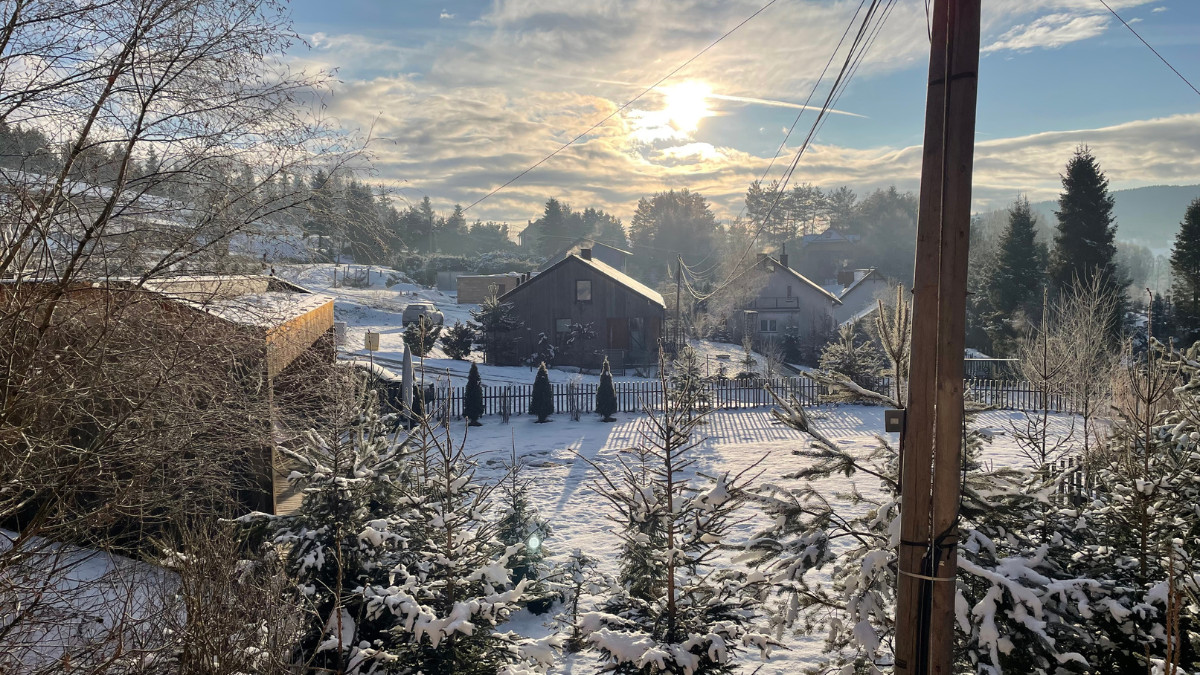
February delivered one of those rare weeks where everything happening around you, and inside you, points at the same idea. We flew to Poland and drove to Tylicz in the Beskid Sądecki mountains for a family ski week: not for me (a knee operation kept me firmly on the bench with hot tea and a good book), but for the kids and their first proper lessons. While they were grinding through five days on the slopes with the Pomarancza ski school, I was quietly testing my personal AI system in real-world conditions. Somewhere between watching my nine-year-old hold her balance for the first time and getting my morning skiing update from my digital assistant, I came across a framework for skill acquisition that made the whole week click.
⛷️ Using The Slope as Classroom
When we arrived at Tylicz, my kids had zero skiing experience. My 9 and 12-year-old started on Kubusiowa Polana, a flat, protected meadow with a magic carpet lift, built specifically for first-timers. Two hours a day, five days, small instructor groups through the Pomarancza ski school. By day three, something shifted. By day five, they were skiing the most challenging slope at the resort.
I watched all of it from the sidelines. What struck me wasn't the speed of the progress. It was how non-linear it looked from the outside. Messy, repetitive, occasionally chaotic. Then, suddenly, connected.
We had proper Polish winter for the full week: snowfall, a snowman, a snowball fight, and generous helpings of traditional food at Pensjonat pod Samowarem to keep everyone going. Exactly what a family ski week should be.
🤖 Testing OpenClaw in the Wild
I've been quietly building OpenClaw — my personal agentic system that connects files, Slack, and external tools into a low-noise daily assistant. The philosophy: reduce cognitive load, stay in control, reliable over impressive.
The Poland trip was its first real test in "Trip Mode." Time zone switched automatically on arrival. Morning skiing updates landed in Slack each day. A daily costs tracker prevented the usual post-holiday financial fog. On-the-go searches for cafés and driving ETAs worked exactly when needed.
It wasn't perfect. No WiFi meant no assistant, and the security constraints I'd set up (separate identity, minimal privileges) made the early days rough. But the core held. By the end of the week, a simple and reliable system had beaten a fancy one. The next step is to refine Trip Mode and reuse it.
🔁 Using Six Steps to Getting Better at Anything
Somewhere between the morning slope reports and the afternoon tea, I came across a framework that I haven't stopped applying since.
- Problem recognition: the gap between where you are and where you want to be.
- Resource assessment: what you already know that's relevant.
- Hypothesis: if X is true, then Y should happen.
- Action: test it.
- Feedback loop: what actually happened.
- Pattern recognition: run enough loops and you can start to predict.
My kids were doing all six on skis, mostly unconsciously. I was doing the same with OpenClaw, mostly deliberately. The framework makes both visible. The gap between a beginner and someone who's genuinely good at something isn't talent, it's the number of loops they've completed.
- Travel Memory System: How I Built One That Carries the Admin
- From Evernote to Obsidian: A Note-Taking Migration Story
- Be Curious, Not Judgemental – shifting from perception to perspective
- A Farmer’s Guide to Patient Leadership and Being Present in Growth
- Build a Home Lab for Local LLMs with Docker + AMD iGPU
#blog
This page is inspired by Derek Sivers “now page” movement.
Updated: 26 Feb 2026