Contents ☕
The first bow lasted about ten minutes.
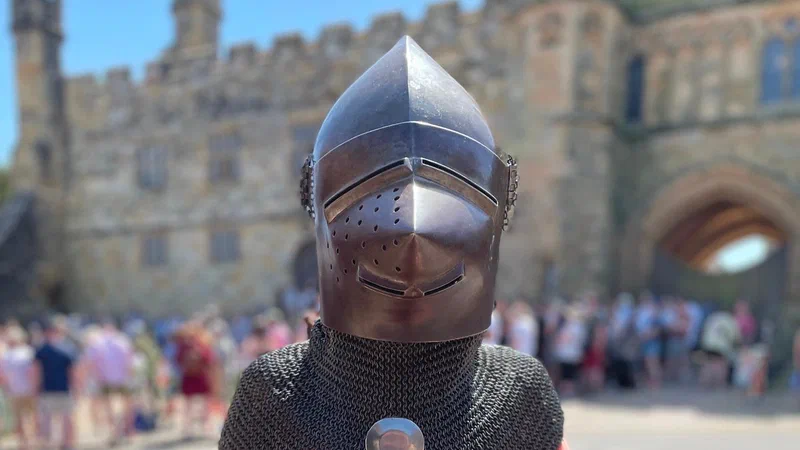
My son had been planning it for weeks. He’s been living in the Middle Ages lately: castles, weapons, how people actually got through a winter. We’re regulars at Hever Castle, and a couple of trips to Battle, where the Battle of Hastings was fought in 1066, only made it worse. Or better, depending on how you look at it.
So one evening he announced he was going to build his own bow, and asked if I could help.
This post is about what happened next. Not the woodwork (I’m no bowyer), but the research. Because the most useful thing I did for him that evening wasn’t giving him answers. It was showing him how to ask AI the right questions, and how not to believe the first thing it says.
I wrote about the mentoring side of this story, and what it taught me about leading without a title, in my newsletter: The Apprentice Loop. This is the practical side, for parents.
☕ The Evening We Didn’t Make a Plan
The easy move would have been to look it up myself, pick a design, and hand him a plan.
I didn’t. Instead, we sat down together, and I showed him how to research it with ChatGPT.
These were the prompts that mattered:
- “Which wood bends without breaking? Why?” Not just which, but why. The why is what he’d need when something went wrong.
- “Show me the sources.” Where does this come from? Who says so?
- “Show me photos of the tree, so I can recognise it in the woods.” This one turned an answer on a screen into something he could go out and find.
He took notes in his notebook as we went. The answer kept coming back the same: ash.
That was a small lesson in itself. One answer from a chatbot is a guess. The same answer, again and again, backed by sources you can check, starts to look like knowledge.
🌳 The Sourcing Mission
Then he asked for a “sourcing mission”.
We went into the woods near our house, with the photos still fresh in his head, and found our ash. We brought home a stave that looked, to both of us, like the start of something great.
It wasn’t.
🏹 When It Snapped (Twice)
The first bow snapped after a handful of shots. So did the next one.
He wasn’t upset (well, maybe a bit). He grabbed his notebook, and we sat down and worked out what went wrong. The stave was uneven. All the force was collecting near the top, and that’s exactly where it broke.
Here’s the part I want other parents to notice. I could see that stave was uneven before he strung it. I said nothing. A bow that snaps teaches more than a parent who says “that’ll snap”.
And because he’d done the research himself, the failure made sense to him. He knew why ash bends. So when it broke, he could ask the next good question: where did the force go?
Then the string turned out to be too weak. That meant a second sourcing mission, this time to the local shop, for… washing line.
For the third bow, he worked on getting the stave an even thickness all the way along. Now the force is spread across the whole limb instead of piling up in one spot.
The third bow worked. It still works today. Now he’s moved on to arrows, and he runs the same loop without me: research, build, use, fix, repeat.
🧭 A Simple Framework for Kids and AI
Earlier this year I came across an infographic by dr Maciej Chrzanowski about introducing children to AI. Looking back, the bow project followed it almost step by step. Here it is, with what it looked like in our house.
1. Explain how it works, in kid terms
AI is a bit like autocomplete on steroids. It predicts the most likely answer from patterns in what it’s read. It doesn’t know things the way people do.
That’s why “show me the sources” matters.
2. Be honest about the limits and the risks
AI can be confidently wrong. It can pretend it cares. It can make pictures of things that never happened and copy people’s voices.
Three family rules worth adopting:
- Verify before you trust. If it matters, check with a person or a source you’ve opened yourself.
- No secrets to AI. No addresses, school names, passwords or family business.
- Pause on persuasion. If something makes you feel scared or rushed (“send money now”, “I’m your friend”), stop and ask an adult.
3. Leave space for questions
This is the important bit. At the end of a session, ask:
- What surprised you?
- What don’t you believe?
- What would you like to test?
The bow answered the last one for us. The woods and the washing line were the test.
4. Do the first project together, and let them have the idea
The bow was his idea, not mine. That’s why he stuck with it through two snapped staves. The infographic’s own examples are lovely too: picture a favourite cartoon character in your child’s bedroom, build a simple game, or turn a topic they’re into right now into a short podcast with NotebookLM.
The sequence underneath it all is simple: explain, show, then experiment together. It works for kids. I suspect it works for grandparents too.
🔗 Useful Links
| Resource | Why it’s useful |
|---|---|
| The Apprentice Loop | The newsletter edition with the mentoring side of this story |
| Ranger’s Apprentice by John Flanagan (Polish: Zwiadowcy) | The book series that started the bow obsession. Great for 10 to 14-year-olds, or for long car journeys as an audiobook |
| NotebookLM | Learning from your own sources, with answers that point back to them |
☕ Lessons Learned From This Coffee Journey
- Ask why, not just what. The why is what helps when things break.
- “Show me the sources” is a habit, not a step. Teach it early and it sticks.
- Turn answers into something you can touch. Photos of the tree beat a paragraph about the tree.
- Let it break when the stakes are low. A snapped bow is a cheap lesson. Say nothing, then debrief.
- Let them own the idea. Kids stick with projects they chose.
The woodwork was his. The questions were the part I could teach. And they’re the part he’ll keep using long after the bow.
What’s the first project you’d try with your kids and AI? I’d love to hear about it. Reply if you’re reading this in the newsletter.
If you found this useful, I’d genuinely appreciate you sharing it with someone who might enjoy it. That’s how Coffee Journeys grows — one thoughtful reader at a time.