
Contents ☕
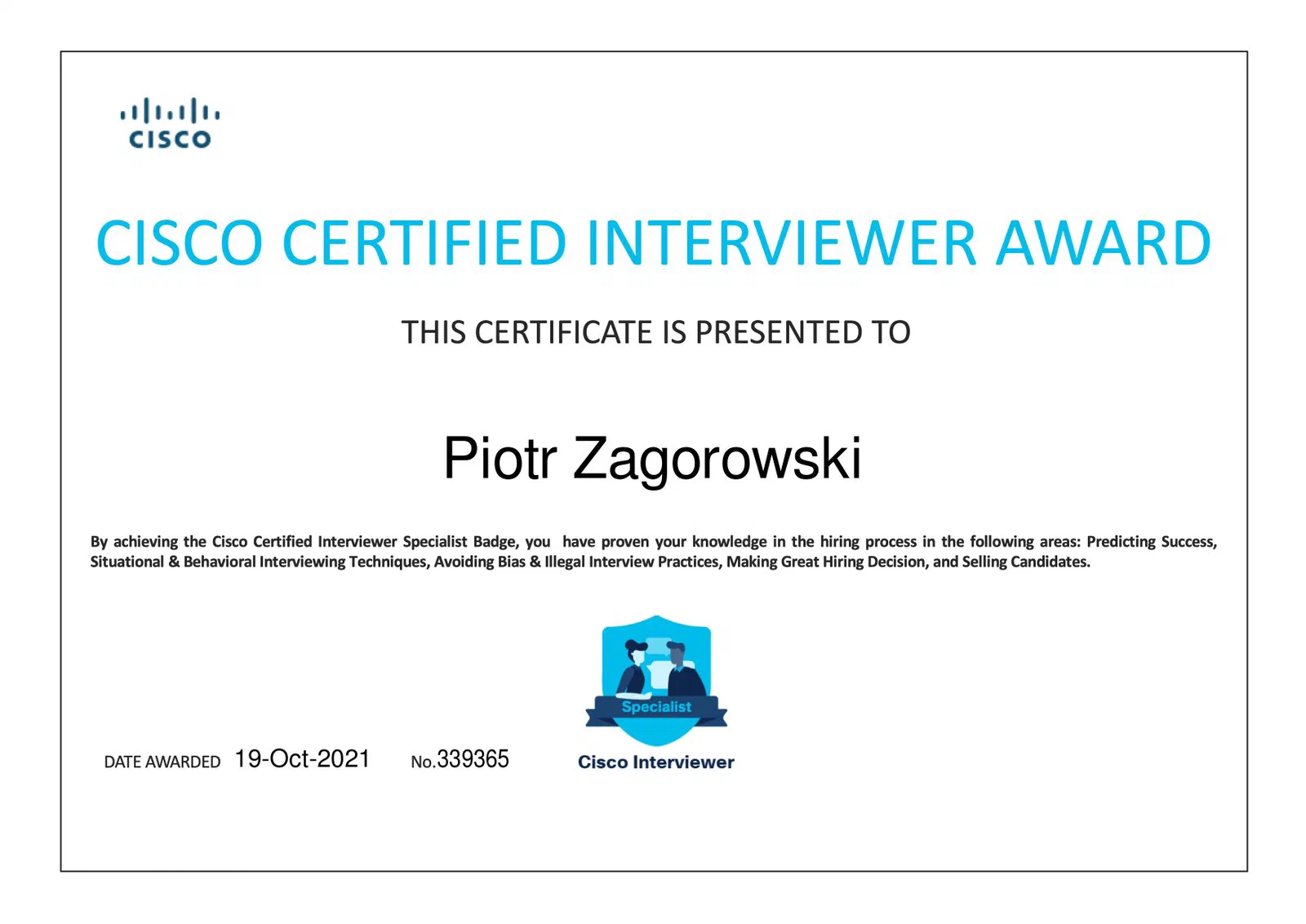
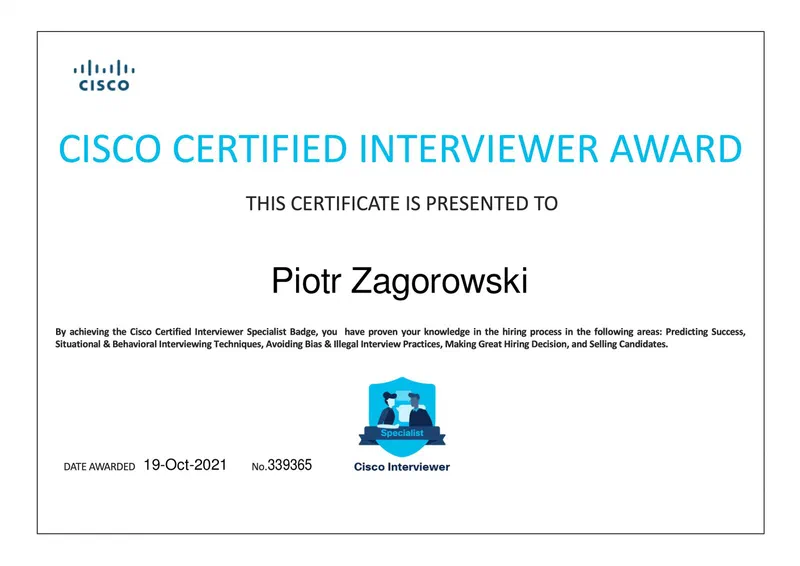
Most of us learn to interview by being interviewed, then copying what was done to us. In 2021, at Cisco, I went through John Vlastelica’s Predicting Success interviewer training: six modules on running interviews that predict whether someone will do well in the job, rather than whether they interview well. It ended with the Cisco Certified Interviewer Award.
| Course | Certified Interviewer Training (Predicting Success methodology) |
| Instructor | John Vlastelica, delivered on SocialTalent |
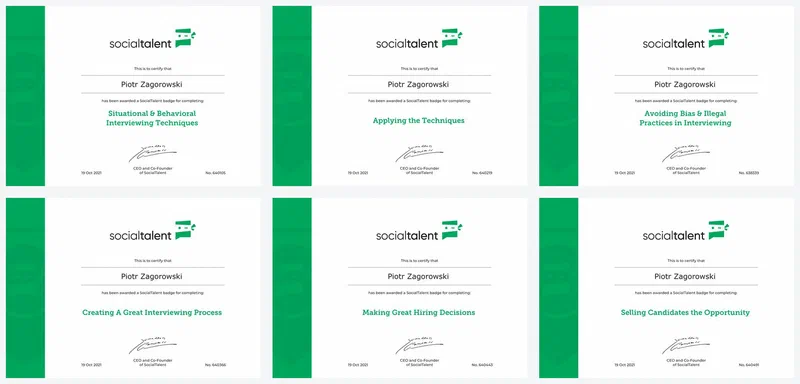
| Modules | Situational and behavioural interviewing, applying the techniques, avoiding bias, the interview process, hiring decisions, selling the opportunity |
| Completed | 19 October 2021, with the Cisco Certified Interviewer Award |
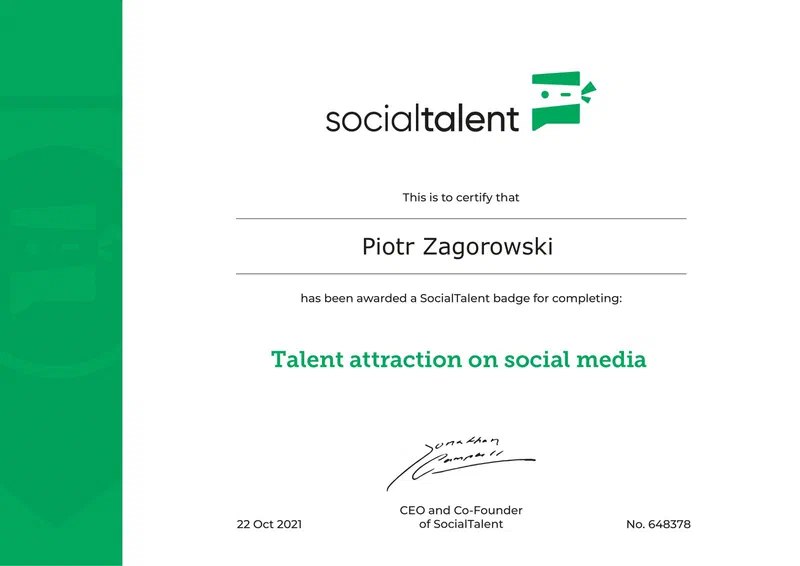
| Also | Talent attraction on social media (Johnny Campbell and Holly Fawcett, SocialTalent), 22 October 2021 |
Behavioural beats hypothetical
The core of the method: ask what someone did, not what they would do. “Tell me about a time you had to deliver bad news to a customer” gets you evidence. “How would you deliver bad news?” gets you a good answer.
Situational questions still have a place, for juniors without the history. But you plan them in advance, against the skills the role needs, so every candidate gets a fair shot at the same questions.
Bias lives in the gaps
The module on bias was less about illegal questions (although it covers those) and more about the gaps where bias creeps in: no agreed criteria before the interview, interviewers comparing notes before they’ve written their own, and “culture fit” as a feeling. I wrote more about the hidden side of this in Invisible Filters: Unmasking Unconscious Bias in Leadership.
Decide on evidence, then sell
Two modules surprised me. Making Great Hiring Decisions: each interviewer writes their verdict and evidence before the debrief, so the loudest voice doesn’t decide. And Selling Candidates the Opportunity: the interview goes both ways. Find out what would make this person move, and talk to that, not to your slide deck.
Before the interview: getting the right people to apply
A few days later I took a companion course on SocialTalent, Talent attraction on social media by Johnny Campbell and Holly Fawcett. Interviewer training assumes the right people are already in the room. This one is about getting them there.
It walks through the channels one by one: Twitter, Facebook, Instagram, LinkedIn and LinkedIn Groups, and audio and video live streaming. For each, it covers how the algorithm decides what gets seen, which features help you reach candidates, and what makes content people want to engage with. It finishes with a strategy: when to post, and what you can automate.
The platforms have changed a lot since 2021, so treat the feature-level advice as dated. The idea underneath still holds: hiring starts long before the job advert, with people already knowing who you are and what it’s like to work with you.
From the interviewer’s chair: hiring an engineer when AI writes code
Years later, I used all of this to design a hiring process for a senior network software engineer.
The obvious approach was to test coding. But when AI tools can write a decent first draft of the code, the ability to type it out isn’t what predicts success. So I shifted the process towards reasoning and problem-solving, and towards the ability to read code critically and improve it, including code an AI had generated.
Before the first candidate, I wrote down what we were looking for: a technical framework (networking, infrastructure automation, operational excellence) and a behavioural one (ownership and collaboration). Then we ran the process through several candidate loops. After each one, the panel calibrated its feedback against those frameworks, and I adjusted the process when something didn’t tell us enough. It found us the strongest candidate, and the method got better with every loop.
Looking back, that’s the course in practice: agree the criteria first, collect evidence rather than impressions, and decide together on what you wrote down.
What to look for
The course teaches how to interview. What to look for is a different question, and I wrote about it in How to Hire for High Potential (nine characteristics, from drive to curiosity) and Recruiting and Retaining High-Agency Talent. If you’re on the other side of the table, start with How to Nail the Job Interview.
Who it’s for
Anyone who sits on an interview panel, whether hiring manager or engineer. Especially engineers who were added to the loop without any training.
Lessons Learned From This Coffee Journey
- Ask what they did, not what they would do.
- Agree the criteria before you meet the candidate.
- Write your verdict before the debrief.
- Test what predicts success in the job as it is now. With AI in the loop, that’s judgement more than typing.
- The interview goes both ways.
- Hiring starts before the advert: people apply to teams they already know.
My certificates
This is one of the courses I recommend for growing your career. What’s the one interview question you always ask? Tell me.